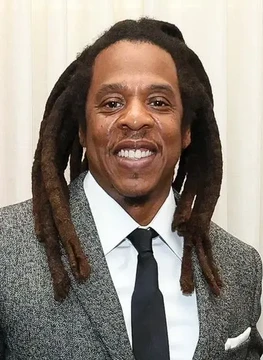
Reasonable Doubt
Not just a debut — a declaration of war on the limits of the possible.

Reasonable Doubt is the debut studio album by American rapper Jay-Z, released on June 25, 1996, by his own record label Roc-A-Fella Records and distributed by Priority Records. The album features production by DJ Premier, Ski, Knobody, and Clark Kent, with guest appearances from Memphis Bleek, Mary J. Blige, Jaz-O, and the Notorious B.I.G. It is built around mafioso rap themes and gritty lyrics about the hustler lifestyle and material obsessions. A critical success, it has been ranked on several publications' lists of hip-hop's greatest albums, and many hip hop fans have viewed it as Jay-Z's best work.
- Artist
- Jay-Z
- Release Year
- 1996
- Label
- Roc-A-Fella Records
- Genre
- East Coast Hip Hop
- Certification
- Platinum
Verified Timeline
Lore & Background
Beyond the music, the album functions as a memoir of survival and calculation. It documents the mindset required to navigate dangerous environments while planning for a legacy beyond them. Fans often view it not just as a collection of songs, but as an audio diary that chronicles the transition from hustler to executive, setting a precedent for how rappers could articulate their rise without losing their edge.
In Their Own Story
The studio lights hummed low in the basement space, casting long shadows against soundproofed walls. Outside, the city never slept, but inside, time stood still as he laid down vocals that would echo through decades. He adjusted his suit jacket — silk, freshly pressed, bought with cash from a corner he'd never work again. The microphone felt heavier than the weight in his pocket, and every bar was a calculated move, a chess piece slid into place. When the session ended, silence filled the room again, but the record player knew better: it was already spinning the sound of a future mogul's first breath.
Reader's Guide
Released on June 25, 1996, Reasonable Doubt is Jay-Z's debut studio album, released on Roc-A-Fella Records and distributed by Priority Records. The album features production by DJ Premier, Ski, Knobody, and Clark Kent, and guest appearances from Memphis Bleek, Mary J. Blige, Jaz-O, and the Notorious B.I.G. It is an East Coast hip-hop record with mafioso rap themes and gritty lyrics about the hustler lifestyle and material obsessions. The album debuted at number 23 on the US Billboard 200, charting for 18 weeks, and was certified Platinum by the RIAA, selling 1.5 million copies in the United States as of 2006. Singles include "Ain't No Nigga" and "Can't Knock the Hustle." In August 2019, it was released to digital and streaming platforms under Roc Nation's independent label, Equity Distribution.
Did You Know?
- Jay-Z sold tapes from his car with help from friend Damon Dash before getting a record deal.
- The recording of 'Brooklyn's Finest' spanned two months and moved from D&D Studios to Giant Studios.
- Neither Jay-Z nor the Notorious B.I.G. wrote down their rhymes while recording 'Brooklyn's Finest'.
- Nas was supposed to be featured on 'Bring It On' and 'Can I Live,' but those sessions never happened.
- The album debuted at number 23 on the Billboard 200 with first-week sales of 43,000 copies.
Origins and Independence
Before achieving mainstream fame, Jay-Z was recruited by mentor Jaz-O in 1989 to appear on "Hawaiian Sophie." After Jaz-O was dropped from his label, Jay-Z dealt drugs to support himself while continuing his rap career. He appeared on two songs from Original Flavor's 1993 album Beyond Flavor, then caught Big Daddy Kane's attention and toured with him, collaborating on Kane's 1994 posse cut "Show & Prove" with Wu-Tang Clan's Ol' Dirty Bastard, Wu-Tang affiliate Shyheim, Sauce Money, and Scoob Lover. Despite this exposure, Jay-Z was still without a record deal. He began selling tapes from his car with help from friend Damon Dash. The success of his street-level marketing led to a deal with Payday Records, which released his first solo single, "In My Lifetime" and its B-side "I Can't Get wit Dat." In an unconventional move, Jay-Z spurned that contract and left Payday to form his own label, Roc-A-Fella Records, with Damon Dash and Kareem "Biggs" Burke. Jay-Z explained that Payday was acting shady and not doing their job, so he took the money they gave him and started his own company. He rented a small, cheap office on John Street in one of the "dreariest parts of the busiest city in the world." In 1995 and early 1996, he appeared on records by Big L and Mic Geronimo, further raising his profile while still considered an "underground" rapper with a "new jack" style.
Production and Collaborative Dynamics
Reasonable Doubt was recorded at D&D Studios and mixed at Platinum Island, but its beats were formed elsewhere. "Can't Knock the Hustle" was produced by Knobody at his mother's home in 1994, with vocals recorded on tour at a studio in Tampa, Florida named Progressive Music with Mary J. Blige. Ski produced "Feelin' It" and "Politics as Usual" while recording with Camp Lo. The recording sessions were often competitive; Ski and Clark Kent created similar beats for "Politics as Usual," but Ski submitted his to Jay-Z first, causing his to appear on the album. "Brooklyn's Finest" was a competitive, though friendly battle between Jay-Z and the Notorious B.I.G. in which Jay-Z tried proving he was of Biggie's caliber, while Biggie tried brushing his rhymes off as insignificant. The rappers had already met on the set for the "Dead Presidents" music video, and they discovered that neither wrote down their rhymes while recording. The recording of "Brooklyn's Finest" spanned two months and moved from D&D Studios to Giant Studios where the Clark Kent-sung chorus was recorded. Irv Gotti and Dame Dash noted that Nas was supposed to be featured on "Bring It On" and "Can I Live," but sessions for neither song ended up happening.
Thematic Depth and Lyrical Style
An East Coast hip-hop record, Reasonable Doubt was noted for having mafioso rap themes, with lyrics characterized by Stylus Magazine as "gritty realism." Writer Dream Hampton believed that although rappers had alluded to hustling before, Jay-Z "talks about what it can do to a person's inner peace, and what it can do to their mind." Jay-Z later said, "the studio was like a psychiatrist's couch for me" while recording the album. AllMusic's Steve Huey described him as "a street hustler from the projects who rapped about what he knew—and he was very, very good at it...detailing his experiences on the streets with disarming honesty." Huey summarizes that Jay-Z is "cocky bordering on arrogant, but playful and witty, and exudes an effortless, unaffected cool throughout." The album's production exhibits characteristics of "the pre-gangsta era, a foregone era when samples fueled the beats and turntablism supplied the hooks," which sets it apart from Jay-Z's later work. Tracks like "22 Two's" demonstrate Jay-Z's extraordinary talent as a pure freestyle rapper and preach a subtle message that bad behavior gets in the way of making money.
Commercial Performance and Enduring Legacy
Reasonable Doubt was released by Roc-A-Fella on June 25, 1996, through a distribution deal with Priority. It reached a peak position of 23 on the Billboard 200 chart, with a sales total of 43,000 in its first week. It spent 18 weeks on the chart, and 55 weeks on the Top R&B/Hip-Hop Albums, on which it reached number 3. The album was promoted with four singles; "Ain't No Nigga" was the highest-charting single at number 50, "Can't Knock the Hustle" and "Feelin' It" did not peak higher than 70, and "Dead Presidents" did not chart altogether. By year end, the album had sold 420,000 copies. On February 7, 2002, Reasonable Doubt was certified Platinum by the Recording Industry Association of America (RIAA), for shipments of a million copies in the US. As of 2006, it has sold 1.5 million copies in the United States. A critical success, it has been ranked on several publications' lists of hip-hop's greatest albums, while many hip hop fans have viewed it as Jay-Z's best work. In August 2019, Reasonable Doubt was released to digital and streaming platforms under Roc Nation's independent label, Equity Distribution.
Frequently Asked Questions
What is Reasonable Doubt?
It is the debut studio album by rapper Jay-Z, released in 1996 under Roc-A-Fella Records. This project established his career as a defining voice in East Coast hip-hop culture.
When was Reasonable Doubt released?
The album officially dropped on June 25, 1996, marking the beginning of Shawn Carter's professional music legacy. It quickly gained critical acclaim for its gritty production and lyrical depth.
Why is this album considered important?
Critics view it as a foundational pillar that introduced Jay-Z's unique vocal style and commercial outlook on urban existence. It effectively set the standard for how artists build empires within the music industry.
What genre does Reasonable Doubt belong to?
The record is categorized under East Coast Hip Hop and features a dark, sample-heavy sound characteristic of that era. This style helped distinguish Jay-Z from his contemporaries in the mid-1990s scene.
Did Reasonable Doubt achieve commercial success?
Yes, the project achieved Multi-Platinum certification over time despite a slow initial start. Its enduring popularity solidified its status as one of the greatest hip-hop albums ever made.
More in Albums & Projects
Elsewhere in the Jay-Z universe
Spotted an error? Know more?
This is a living reference — every entry is fact-audited, and reader corrections feed straight into our audit queue. Suggest an edit · See this site's audit record