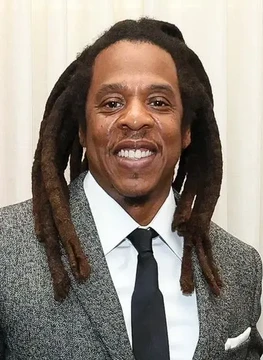
Hard Knock Life
A Broadway orphan's anthem flipped into a Brooklyn projects survival anthem.

"Hard Knock Life (Ghetto Anthem)" is the breakout single from Jay-Z's 1998 second studio album, *Vol. 2... Hard Knock Life*, released on Roc-A-Fella Records. It became Jay-Z's first Billboard Hot 100 number-one single and remains one of the most recognizable hip-hop records of the late '90s. The song functions as both a personal coming-of-age statement and a cultural touchstone, capturing the tension between the aspirational, sanitized version of urban life presented in mainstream media and the gritty, day-to-day reality of inner-city upbringing. For fans, it is the record that announced Jay-Z not just as a local Brooklyn MC but as a voice for a generation navigating between two very different worlds.
- Artist
- Jay-Z (Shawn Corey Carter)
- Album
- Vol. 2... Hard Knock Life
- Release year
- 1998
- Label
- Roc-A-Fella Records
- Chart peak
- #1, Billboard Hot 100
- Significance
- Jay-Z's first Billboard Hot 100 number-one single
Lore & Background
The genius of the track lies in its central irony. The *Annie* musical presents a world where a street kid can be adopted into wealth, where the city is a playground of possibility, where everyone sings in harmony. Jay-Z takes that same melodic skeleton and drops it under verses that describe cracked sidewalks, corner stores, and the constant low hum of danger. The bouncy piano figure and the children's chorus become a lullaby that no longer soothes; they become a reminder of a world the narrator was never invited into. The contrast is the entire argument of the song. Musically, the production strips the original arrangement down to its most recognizable elements—the piano riff, the vocal hook—while adding a harder, more percussive hip-hop beat underneath. The result is a track that feels simultaneously nostalgic and confrontational, like remembering a cartoon you loved as a kid and suddenly realizing the characters never had to worry about rent. The tempo keeps the energy high and danceable, which is part of the joke and part of the pain: the music refuses to let you wallow, even as the words demand you sit with the discomfort. Culturally, the song landed at a moment when hip-hop was still negotiating its relationship with mainstream pop and Broadway. By sampling a children's musical and turning it into a chart-topping rap record, Jay-Z collapsed a genre boundary that many in the industry considered untouchable. It proved that a Brooklyn MC could co-opt a Gershwin-adjacent theatrical number and make it feel more authentic than the original, simply by filling the spaces between the notes with lived experience.
In Their Own Story
The fluorescent lights in the Marcy Projects laundry room hum at a frequency that vibrates in the back of your teeth. You're twelve, sitting on the edge of a folding table, watching the dryer spin its slow circle. Through the single window, the afternoon sun hits the brick of the adjacent building and throws a long orange stripe across the concrete floor. Somewhere down the block, a kid is yelling a name. You don't look up. You've got a cassette in your Walkman, the one your cousin pressed for you, and the piano is starting up again—that bright, stupid, cheerful piano that sounds like it belongs in a school cafeteria, not in a place where the water pressure drops every Tuesday. You press play. The little voices come in, singing about a hard knock life, and for a second you almost laugh, because it's true, it really is true, and the fact that they're singing it like it's a game makes it worse. You rewind. You play it again. The dryer stops. The stripe of sun shifts an inch. You are still here.
Reader's Guide
The entire track is built on a single act of musical misdirection. Jay-Z keeps the piano figure and the vocal hook almost intact, then undercuts them with verses that treat the same subject matter as a daily survival exercise. The wordplay lives in that gap: the musical's "hard knock life" is a performance, a thing that ends with a happy adoption; the rapper's is a condition, a Tuesday, a recurring Tuesday. The most quoted line—about taking a boy out of the projects but not taking the projects out of the boy—works because it's structured as a common proverb ("you can take a boy out of the country…") but the substitution of "projects" for "country" reframes the entire American mobility myth. The boy isn't leaving a rural idyll; he's leaving a specific zip code, a specific set of stairwells, a specific economy of corner-store credit. The proverb's universal comfort becomes a very local, very specific impossibility. The hook itself, with its children's voices singing the *Annie* refrain, is placed at the end of each verse like a period that doesn't quite end the sentence. It's the sound of the world the narrator was promised, arriving on schedule, cheerful and indifferent, while the next verse drops back into the block. The structure—verse, hook, verse, hook—mimics the rhythm of a kid's day: the small bright moments (school, a treat, a game) punctuated by the long stretch of the same street, the same faces, the same low-grade tension. The craft is in the repetition, in letting the cheerful sample do the emotional work that the lyrics refuse to do.
Did You Know?
- The song's number-one run on the Billboard Hot 100 made Jay-Z the first solo rapper to top the chart under his own name with a Roc-A-Fella release, a milestone the label celebrated heavily in 1999.
- The album *Vol. 2... Hard Knock Life* was named directly after the track, signaling that the song's theme of navigating between two worlds was the conceptual spine of the entire record.
- The juxtaposition of a children's Broadway number with hardcore hip-hop verses became a template that later producers and artists revisited, treating the *Annie* sample as a shorthand for the gap between American optimis
More in Lyrics & Samples
Elsewhere in the Jay-Z universe
Spotted an error? Know more?
This is a living reference — every entry is fact-audited, and reader corrections feed straight into our audit queue. Suggest an edit · See this site's audit record