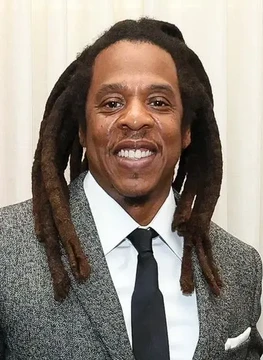
Co-Founder of Roc-A-Fella Records (1995)
Three friends, one studio, and the blueprint for a generation of East Coast rap.

Roc-A-Fella Records, co-founded in 1995 by Shawn Carter (Jay-Z), Damon Dash, and Kareem 'Biggs' Burke, stands as one of the most consequential independent hip-hop labels in American music history. Born out of a shared vision in New York City, the label became the creative engine behind Jay-Z's rise to superstardom and a proving ground for a generation of East Coast rappers who would reshape the sound and business of rap in the late 1990s and early 2000s. Rather than simply signing artists, Roc-A-Fella functioned as a cultural institution: a place where songwriting, production, visual identity, and street-level authenticity were treated as a unified craft. Its influence on the hip-hop landscape—both artistically and commercially—remains a touchstone that fans and scholars continue to study decades later.
- Founded
- 1995
- Co-Founders
- Jay-Z (Shawn Carter), Damon Dash, Kareem 'Biggs' Burke
- Headquarters
- New York City, New York
- Signature early release
- Reasonable Doubt (1996)
- Genre focus
- East Coast hip-hop
- Later distribution partnership
- Def Jam Recordings (Universal Music Group)
Lore & Background
The story of Roc-A-Fella's birth is inseparable from the New York hip-hop scene of the mid-1990s. Damon Dash, a young entrepreneur with a background in the music business, recognized in Jay-Z a lyricist whose raw technical skill and commanding presence could anchor a label. Kareem Burke, a close friend and confidant, rounded out the trio. Together they pooled limited capital, rented modest office space, and set a clear mandate: artists would write their own material, retain creative control, and the label would treat every release as a statement rather than a product. That philosophy produced an immediate seismic shift. When Reasonable Doubt hit shelves in 1996, its dense wordplay, cinematic production, and unapologetic self-mythology redefined what a debut album could be. The LOX, Cormega, Beanie Sigel, Ja Rule, and Styles P followed, each bringing distinct flavors while the label's overall aesthetic—polished yet street-rooted, literary yet visceral—remained unmistakable. Roc-A-Fella became synonymous with a particular New York swagger that rivaled and often surpassed the West Coast dominance of the era. The label's later years saw the partnership with Def Jam expand its distribution reach, but also brought internal tensions. The eventual dissolution of the original three-man partnership and the sale of the label's assets marked the end of an era, yet the imprint's legacy as a creative incubator and a model for artist-driven ownership in hip-hop endures in how subsequent generations of rappers structure their own ventures.
In Their Own Story
The fluorescent tubes in the tiny Manhattan office buzzed at a frequency that made the back of your neck tingle. It was a Tuesday in the summer of '95, and the air smelled of stale coffee and the particular dust that settles on every surface in a building that's seen better decades. Jay-Z sat cross-legged on a folding chair, a notebook open on his knee, muttering syllables under his breath the way a chess player talks to themselves mid-game. Damon paced the narrow strip of floor between the desk and the window, phone pressed to his ear, negotiating something with a distributor whose name he'd already forgotten. Biggs leaned against the wall, arms folded, watching both of them with the patient amusement of a man who'd seen this exact scene a hundred times in a hundred different rooms. Someone dropped a cassette tape on the desk. The tape label read 'RD – final mix?' in wobbly marker. Jay-Z didn't look up. He just tapped the tape twice with one finger, nodded, and said, 'That's the one.' And in that small, humming, coffee-stained room, the next decade of hip-hop got its address.
Reader's Guide
CATEGORY: Founding / Cultural Impact Achievement: Co-founding Roc-A-Fella Records (1995) Notable context: At the time, the hip-hop landscape was dominated by major-label imprints and West Coast collectives. Three young New Yorkers built an independent label with no inherited infrastructure, no major-label safety net, and a roster assembled almost entirely through personal relationships. The fact that this small operation produced one of the most critically acclaimed debut albums in rap history (Reasonable Doubt, 1996) and went on to shape the sound of an entire decade is widely regarded as one of the great independent-label success stories in popular music. CATEGORY: Roster & Creative Output Notable context: Roc-A-Fella's roster—Jay-Z, The LOX, Cormega, Beanie Sigel, Ja Rule, Styles P—represented a breadth of vocal styles and production approaches uncommon among labels of that size. The label's emphasis on lyricism, in-house production, and visual cohesion gave it a distinct identity that fans could recognize instantly, setting a template for artist-driven labels that followed. CATEGORY: Industry Precedent Notable context: The label's later partnership with Def Jam Recordings demonstrated a model in which an independent creative entity could leverage major-label distribution without surrendering its artistic identity. This hybrid structure influenced how subsequent hip-hop entrepreneurs negotiated relationships with the broader music industry.
Did You Know?
- Roc-A-Fella's founding trio—Jay-Z, Damon Dash, and Kareem Burke—were all close personal friends before the label existed, and the operation was initially run out of a modest New York office rather than a corporate campus
- The label's first major release, Reasonable Doubt, was recorded and mixed largely in-house, reflecting the founders' insistence that artists retain direct control over their sound.
- Roc-A-Fella's roster included both solo artists and groups (such as The LOX), giving the label a stylistic range that set it apart from more homogeneous hip-hop imprints of the mid-1990s.
- The label's later distribution partnership with Def Jam Recordings allowed its artists to reach national and international audiences while the Roc-A-Fella brand and creative direction remained distinct.
More in Awards & Records
Elsewhere in the Jay-Z universe
Spotted an error? Know more?
This is a living reference — every entry is fact-audited, and reader corrections feed straight into our audit queue. Suggest an edit · See this site's audit record