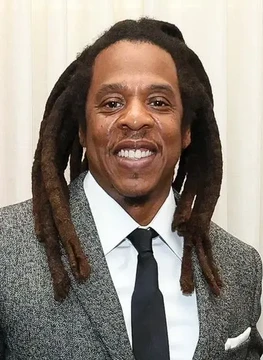
The Def Jam Partnership Years
The era when a Brooklyn street poet learned to own the boardroom, not just the corner.

The Def Jam Partnership Years mark the moment Shawn Carter stopped being just a voice from the Marcy Projects and became a seismic force inside hip-hop's corporate machinery. Through a distribution deal with Def Jam Recordings, he launched his professional recording career as Jay-Z, transforming raw street narratives into a blueprint for artistic and commercial dominance. This era wasn't just about making records—it was about rewriting the rules of power in an industry that rarely let the artist win.
- Real Name
- Shawn Carter
- Stage Name
- Jay-Z
- Label Affiliation
- Roc-A-Fella Records (distributed by Def Jam Recordings)
- Key Mentor
- Russell Simmons
- Debut Album Era
- Reasonable Doubt
- Status
- Legendary Industry Veteran
Lore & Background
The partnership was a crucible disguised as a distribution contract. Working alongside industry titans, Jay-Z absorbed a crucial lesson: lyrical brilliance alone couldn't sustain a career; it required strategic alliances, brand architecture, and a willingness to play the long game. The albums from this tenure—often hailed as the Rosetta Stone of hip-hop entrepreneurship—showcased a voice equally at home on a stoop or in a corner office. This period didn't just cement his status as a peer to legends; it carved out a new space where commerce and art fed each other, each track a lesson in leverage.
In Their Own Story
The fluorescent lights of the Def Jam office hummed with a low, electric tension. Shawn sat across from the label heads, the air thick with stale coffee and expensive cigars. He wasn't pitching a single song; he was unfurling a vision of a brand that could outlive any hit. As he spoke, his voice matched the beat in his head—a steady, driving cadence that promised success not through luck, but through sheer, unyielding calculation. In that room, the street poet didn't just sign a deal; he began the slow, deliberate takeover of the machine that had once only consumed artists like him.
Reader's Guide
The journey begins with a debut that blindsided critics and fans alike: jazz-touched beats layered with dark, introspective verses about survival in Brooklyn. This wasn't glorification—it was testimony, each bar a vivid snapshot of a life few could imagine and even fewer survived. As the years rolled on, the sound polished itself without losing its edge. The production grew radio-friendly, but the lyrics stayed dense, each verse a puzzle box of ambition and regret. Jay-Z began pulling levers inside the label, shifting from talent to architect—shaping artist development, marketing strategies, and the very direction of Def Jam's sound. By the end of this era, his public image had hardened into that of a confident titan. The music turned anthemic, celebrating resilience and hard-won success, while behind the scenes, he was quietly laying the foundation for a future where he would own the very label that once signed him.
Did You Know?
- This era produced 'Reasonable Doubt,' a debut album often hailed as a masterpiece of street storytelling and still debated as one of hip-hop's greatest first statements.
- During his later executive phase, he became known for wearing tailored suits to meetings, blending corporate polish with street credibility—a visual declaration that he could navigate both worlds.
- The partnership gave him access to legendary producers like DJ Premier, Ski, and the Trackmasters, whose beats became the bedrock of his early sound.
- He used this period to master the intricacies of publishing rights and royalty structures, knowledge that later became the engine of his billion-dollar empire.
Formation and Corporate Consolidation
The Island Def Jam Music Group emerged as a powerhouse entity on December 31, 1998, following the massive $10.6 billion acquisition of PolyGram by Seagram Company. This financial maneuver merged PolyGram's music division with MCA Music to create Universal Music Group, subsequently consolidating fourteen distinct recording labels under one roof in 1999. Despite this unification, Island Records and Def Jam Recordings retained their autonomy while operating within the new structure alongside Mercury Records. Lyor Cohen was appointed as the unit's first president, steering a group that stood as one of four major label groups within Universal. While the U.S. operation functioned under a single banner, international distribution varied; for instance, Island Records in the United Kingdom remained separate, and Def Jam UK was initially distributed by Mercury before facing later revocation of U.S. distribution rights. This complex restructuring laid the groundwork for a decade of significant industry influence.
Early Expansion and Strategic Acquisitions
The unit's early years were defined by aggressive expansion and strategic consolidation of its roster. Its first official release, Biohazard's *New World Disorder*, marked the beginning of an era where labels like Def Soul, Roc-A-Fella, and Murder Inc. Records were absorbed into the umbrella. During this period, Mercury Records' artists were systematically reassigned based on genre, with urban acts moving to Def Jam while pop and rock talents shifted to Island. The group also looked outward, launching Def Jam Germany in 2000 as its first international outpost and forming Lost Highway Records for country music in 2001. A significant move occurred in the summer of 2001 when the group acquired a controlling interest in rock label Roadrunner Records, though this sparked legal friction with Edel SE & Co. KGaA. Commercially, the turn of the millennium proved lucrative, driven by strong performances from hip-hop heavyweights like LL Cool J, DMX, and Method Man.
Leadership Shifts and Legal Turbulence
The mid-2000s brought significant upheaval characterized by high-profile legal battles and executive turnover. In July 2002, the group released a successful compilation for Murder Inc. Records, but federal investigations into money laundering forced a complete severance of ties with producer Irv Gotti in early 2003. Simultaneously, a complex legal dispute arose regarding a Cash Money Click reunion album involving Ja Rule and TVT Records. President Lyor Cohen's involvement led to a massive initial damages award against him, which was later drastically reduced on appeal after the court reclassified the issue as a breach of contract rather than fraud. These challenges coincided with a major leadership change in 2004 when L.A. Reid replaced Cohen as president and CEO. Cohen's departure saw key colleagues Kevin Liles and Julie Greenwald follow him to Warner Music Group, reshaping the executive landscape just as the group solidified its control over Roc-A-Fella Records.
Corporate Evolution and Final Restructuring
The operational life of Island Def Jam Music Group concluded with a series of strategic dissolutions and realignments within Universal. By April 1, 2014, Universal Music Group officially announced the dissolution of the Def Jam Group, effectively ending the unified umbrella that had existed since 1998. This move separated IDJMG and its subsidiaries into distinct sister labels, marking a return to independent operations for Island Records and Def Jam Recordings under the broader corporate structure. The legacy of this era continued through various imprint movements; for example, Lost Highway Records eventually migrated to Universal Music's Nashville division following the 2014 split. This final restructuring highlighted the enduring yet evolving nature of these historic brands within the modern music industry.
Frequently Asked Questions
What defines The Def Jam Partnership Years in Jay-Z's career?
This era marks Shawn Carter's transition from an underground Brooklyn rapper to a major industry force after signing with Rick Rubin and Russell Simmons. It covers the launch of his professional recording career under the name Jay-Z, culminating in his debut album, Reasonable Doubt.
Who were the key mentors during The Def Jam Partnership Years?
The period was defined by Jay-Z's partnership with legendary label founders Rick Rubin and Russell Simmons at Def Jam Recordings. These figures guided him as he navigated the high-stakes business of music distribution while establishing his artistic identity.
What is the significance of Reasonable Doubt in this timeline?
Released during these years, Reasonable Doubt served as the cornerstone album that solidified Jay-Z's status as a commanding voice in hip-hop. It represents the successful fusion of street poetry with the corporate machinery of Def Jam.
How did The Def Jam Partnership Years change Jay-Z's role in music?
This foundational chapter transformed him from a promising talent into a legendary industry veteran by introducing him to the complexities of label politics and distribution. It set the stage for his future evolution as both an artist and a business mogul.
Why is this era considered pivotal for hip-hop history?
It represents the moment a Brooklyn street poet successfully conquered the corporate boardroom, proving that authentic storytelling could thrive within major label structures. This success established a blueprint for future artists seeking to balance artistic integrity with commercial power.
More in Eras & Timeline
Elsewhere in the Jay-Z universe
Spotted an error? Know more?
This is a living reference — every entry is fact-audited, and reader corrections feed straight into our audit queue. Suggest an edit · See this site's audit record