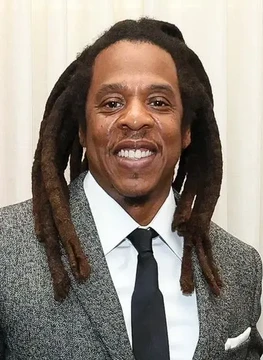
JAY-Z
From Brooklyn rapper to Def Jam president: the career that stacked thirteen studio albums and eleven number-ones.

via Wikipedia: Jay-Z albums discography · see source
American rapper Jay-Z has released thirteen studio albums, four collaboration albums, one live album, one compilation album, one soundtrack album, two extended plays (EPs), 115 singles (including 45 as a featured artist), nine promotional singles, and 82 music videos. As of December 2014, Jay-Z sold 29,179,000 studio albums in the United States. He began his music career in the 1980s, building a reputation as a fledgling rapper in his hometown of Brooklyn, and collaborating with his mentor and fellow rapper Jaz-O.
- Label Founder
- Roc-A-Fella Records (co-founded with Damon Dash and Kareem 'Biggs' Burke)
Verified Timeline
Lore & Background
Jay-Z founded Roc-A-Fella Records with close friends Damon Dash and Kareem "Biggs" Burke, and released his debut album, Reasonable Doubt (1996). The album peaked at number 23 on the US Billboard 200 and has since been recognized as a seminal work of the hip hop genre. Its singles includes "Dead Presidents", "Ain't No Nigga", and "Can't Knock the Hustle", all of which reached the top ten on the Billboard Hot Rap Songs chart. His second album, In My Lifetime, Vol. 1 (1997), saw Jay-Z collaborating with producers such as Sean "Puff Daddy" Combs and Teddy Riley, and peaked at number three on the Billboard 200 and earned a platinum certification from the RIAA. His third album, Vol. 2... Hard Knock Life (1998), became his first number-one album in the United States. The album featured the international hits such as "Can I Get A..." and "Hard Knock Life (Ghetto Anthem)", which both reached top twenty of the Billboard Hot 100. Vol. 2... Hard Knock Life was certified five times platinum by the RIAA and won the Grammy Award for Best Rap Album in 1999. Two more chart-topping albums–Vol. 3... Life and Times of S. Carter (1999) and The Dynasty: Roc La Familia (2000)–followed with both of these two albums includes hit singles such as "Big Pimpin'" and "I Just Wanna Love U (Give It 2 Me)", and the latter record features several guest appearances from artists signed to Roc-A-Fella.
In Their Own Story
His sixth album, The Blueprint (2001), topped the Billboard 200, and produced Jay-Z's first Billboard Hot 100 top ten single, "Izzo (H.O.V.A.)". The Blueprint was critically reviewed as his best album, while two other records–being his first collaborative album, The Best of Both Worlds (with American R&B singer R. Kelly), and his seventh album, The Blueprint 2: The Gift & The Curse (2002)–were both released the following year. The latter album peaked at number one on the Billboard 200 and featured the top ten singles "'03 Bonnie & Clyde" and "Excuse Me Miss". His eighth album, The Black Album (2003), was intended by Jay-Z to be his final studio album and features his impending retirement as a recurring theme. The album performed well commercially and was later certified 3x Multi-Platinum by the RIAA. Following a period of dormancy, Jay-Z became president of Def Jam Recordings in December 2004 and resumed his rap career two years later with the release of Kingdom Come (2006), which peaked at number one on the Billboard 200 and was certified 2x Multi-Platinum by the RIAA. The concept album, American Gangster (2007), continued his streak of number-one albums in the United States. With the release of The Blueprint 3 (2009), Jay-Z surpassed Elvis Presley as the solo artist with the most number-one albums on the Billboard 200. The album included the international hits such as "Run This Town", "Empire State of Mind" and "Young Forever". His fourth collaborative album, Watch the Throne (with American rapper Kanye West), followed in August 2011, and became Jay-Z's eleventh number-one album in the United States. His twelfth album, Magna Carta Holy Grail (2013), was a great commercial success, topping the Billboard 200 and having the second-biggest sales week for 2013 at the time of its release.
Reader's Guide
Jay-Z's collaborations span multiple genres and eras. His first collaborative album, The Best of Both Worlds, was with American R&B singer R. Kelly. Watch the Throne, his fourth collaborative album, was with American rapper Kanye West and became his eleventh number-one album in the United States. He also formed The Carters with Beyoncé, though the source does not detail their joint projects. His work with producers like Sean "Puff Daddy" Combs and Teddy Riley on In My Lifetime, Vol. 1 helped shape his early sound, while Kanye West's production on The Blueprint defined a new era.
Did You Know?
- Jay-Z's debut album Reasonable Doubt peaked at number 23 on the US Billboard 200.
- Vol. 2... Hard Knock Life won the Grammy Award for Best Rap Album in 1999.
- With The Blueprint 3 (2009), Jay-Z surpassed Elvis Presley as the solo artist with the most number-one albums on the Billboard 200.
- Jay-Z became president of Def Jam Recordings in December 2004.
- Magna Carta Holy Grail (2013) had the second-biggest sales week for 2013 at the time of its release.
Frequently Asked Questions
Who is JAY-Z?
Jay-Z is the global stage name of Shawn Corey Carter, a legendary rapper and entrepreneur from New York. He built an empire by merging artistic talent with sharp commercial strategy.
Where did JAY-Z originate?
He originally emerged from the Marcy Projects in Brooklyn before rising to international fame. This background heavily influenced his lyrical storytelling and hustle mentality.
What labels has JAY-Z founded?
Carter established Roc-A-Fella Records early in his career and later launched Roc Nation to manage artists and events. These ventures cemented his reputation as a business leader outside of just making records.
Who are The Carters?
This key affiliation refers to Jay-Z's partnership with his wife, Beyoncé, combining their influence in music and culture. They operate together under this moniker for various projects and performances.
Is JAY-Z still active today?
He currently holds the status of an active industry leader while continuing his musical output. His career is defined by a continuous evolution rather than a static endpoint.
More in Artists & Collaborators
Elsewhere in the Jay-Z universe
Spotted an error? Know more?
This is a living reference — every entry is fact-audited, and reader corrections feed straight into our audit queue. Suggest an edit · See this site's audit record