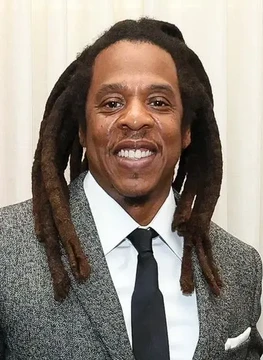
Lil Wayne
The New Orleans hurricane who turned freestyle into a religion and made rap feel infinite.

Lil Wayne (Dwayne Michael Carter Jr.) is a New Orleans rapper, songwriter, and record executive who became one of the most prolific and influential voices in 21st-century hip-hop. In the broader Jay-Z universe of hip-hop's business, artistry, and cultural dominance, Wayne occupies the space of the raw, untamed creative force—the freestyle king whose boundless energy and melodic inventiveness contrasted with and complemented Jay-Z's precision, gravitas, and empire-building. Their relationship is less a formal mentorship and more a mutual recognition between two artists who defined different eras and philosophies of rap: Jay-Z as the architect and statesman, Wayne as the perpetual storm. They shared stages, exchanged respect in the press, and operated in the same orbit of hip-hop's upper echelon for over a decade, each representing a different answer to the question of what a rapper can be.
- Role
- Rapper, songwriter, record executive, producer
- Affiliation
- Cash Money Records / Young Money Entertainment
- Origin
- New Orleans, Louisiana
- Signature series
- Tha Carter (I through IV)
- Known for
- Freestyle rap, prolific output, melodic flow, playful lyricism
- Era of peak prominence
- Mid-2000s through mid-2010s
Lore & Background
Born in the projects of New Orleans, Wayne entered the national conversation as a teenager on Birdman's Cash Money Records, where his rapid-fire delivery and cartoonish wordplay set him apart from the more measured East Coast and West Coast sounds dominating the late '90s. His solo breakout, Tha Carter, announced a new kind of rapper: one who could switch between aggressive bars and melodic hooks in the same breath, who treated the microphone like a playground and a weapon simultaneously. The subsequent Tha Carter installments cemented him as a genre-shifting force, particularly Tha Carter III, which showcased his range from street-level storytelling to reflective, almost confessional lyricism. Wayne's creative output was almost industrial in scale. He recorded prolifically, dropped mixtapes and studio albums in rapid succession, and maintained a public persona that oscillated between the playful 'Dedew' alter ego and a more introspective, vulnerable artist. His freestyle sessions—often improvised in real time on radio shows and at concerts—became a cultural phenomenon, elevating spontaneous rapping to an art form and a competitive sport. In the landscape where Jay-Z represented hip-hop as a business, a brand, and a legacy project, Wayne represented hip-hop as pure, unfiltered creative excess. Their professional orbits crossed repeatedly through the 2000s and 2010s. Both men operated at the apex of the industry, and their relationship carried the weight of mutual respect between two artists who understood that dominance in hip-hop required both technical mastery and cultural presence. Wayne's energy and unpredictability served as a counterweight to Jay-Z's calculated authority, and together they represented the full spectrum of what the genre could demand of its audience.
In Their Own Story
The stage lights at the arena cut through a haze that smelled like dry ice and old sweat. Wayne stood at the center, eyes closed, letting the beat breathe through him before the first bar hit. The crowd was a single organism—hands up, phones glowing like a field of fireflies. He opened his mouth and the sound that came out was not quite singing, not quite rapping, something in between that had no name. Across the front row, a man in a dark coat watched with the quiet attention of someone who had spent twenty years building an empire and still felt the electricity of a voice doing something he'd never quite been able to replicate: making a stadium of strangers feel like a single, laughing, breathing thought. The set ended. Wayne pointed at the crowd, then at the man in the coat, and they both grinned like kids who'd just gotten away with something. The lights came up. The night belonged to no one and everyone at once.
Reader's Guide
The most defining moment of their bond isn't a single track but a shared cultural moment: two artists at the summit of hip-hop, representing opposite philosophies, acknowledging each other's gravity. Jay-Z is the architect—methodical, business-minded, building institutions. Wayne is the hurricane—improvisational, prolific, treating every bar like a dare. Their intersection lives in the space between those two energies. They shared stages at major festivals and industry events throughout the 2000s and 2010s, and their professional relationship carried the unspoken respect of two men who understood that hip-hop's throne was never truly held by one person alone. Wayne's freestyle dominance and melodic inventiveness expanded what the genre's audience expected, while Jay-Z's longevity and business acumen set the standard for what a career could sustain. Together, they bookended the modern era of rap: one as the perpetual innovator, the other as the enduring institution. Why the pairing matters: for fans, it represents the idea that hip-hop is not a single lane. You can be the statesman and the street poet. You can build a company and you can spit a verse that makes a stranger cry in a parking lot. Wayne and Jay-Z, in their different registers, proved that the genre's ceiling was not a ceiling at all—it was a door. And they both walked through it, in different directions, leaving the frame standing for whoever came next.
Did You Know?
- Lil Wayne's freestyle rap sessions, often performed live on radio shows and at concerts, helped elevate improvised rapping into a recognized competitive art form and a major draw for live hip-hop audiences.
- He founded Young Money Entertainment as a subsidiary label, nurturing a generation of artists and producers while still performing as a headliner himself.
- His Tha Carter album series became one of hip-hop's most recognizable naming conventions, with each installment marking a distinct phase in his artistic evolution.
- Wayne's playful 'Dedew' persona and his more introspective, vulnerable songwriting coexisted throughout his career, giving fans two complementary windows into the same artist.
More in Artists & Collaborators
Elsewhere in the Jay-Z universe
Spotted an error? Know more?
This is a living reference — every entry is fact-audited, and reader corrections feed straight into our audit queue. Suggest an edit · See this site's audit record