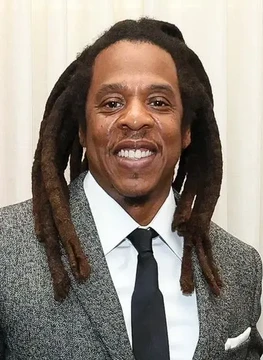
Timbaland
The architect who built Jay-Z a spaceship and called it a beat.

Timbaland—born Timothy Zachary Mosley in Norfolk, Virginia—is one of the most architecturally influential producers in modern hip-hop and R&B. In the Jay-Z universe, he occupies the role of sonic world-builder: the man behind the glass who handed the mic to a poet and said, 'Here's a world you've never heard before.' His production philosophy—sparse, percussive, laced with chopped vocal textures and futuristic synth stabs—cut a different groove than the boom-bap or the swing era, and when it crossed paths with Jay-Z's lyrical machinery, the result was a collision of street credibility and studio futurism. Fans of the Roc-A-Fella catalog recognize Timbaland's fingerprints as the moments where the beat stops sounding like New York and starts sounding like a spaceship docking in a church. He is the collaborator who proved that Jay-Z's voice could float over a beat that had no traditional snare, no conventional kick pattern, and yet still made the whole room move.
- Role
- Producer, Singer, Songwriter, Multi-instrumentalist
- Hometown
- Norfolk, Virginia
- Active since
- Mid-1990s
- Signature sound
- Sparse percussion, vocal chops, futuristic synth textures
- Notable production clients
- Aaliyah, Missy Elliott, Nelly Furtado, 50 Cent, Jay-Z
- Collaboration with Jay-Z
- Production and creative input on Roc-A-Fella-era material
Lore & Background
Timbaland's production language emerged from the Virginia scene in the mid-nineties, where he and his production partner Mag were flipping samples into something that felt less like hip-hop and more like a fever dream scored for a film that hadn't been made yet. His early work with Aaliyah and Missy Elliott established a template: take a vocal phrase, slice it into fragments, re-sequence it as a melodic hook, then build a skeletal drum pattern underneath that leaves enormous negative space. The effect is hypnotic, almost ceremonial, as if the beat is a ritual and the listener is the congregation. When that aesthetic entered the Jay-Z orbit, it created a fascinating tension. Jay-Z's identity was built on the concrete: the Bronx, the block, the pen, the punchline. Timbaland's identity was built on the abstract: the waveform, the frequency, the space between notes. Their intersection produced tracks where the lyricist sounds like he's narrating a heist while the beat sounds like it's narrating a dream. That duality—grounded and weightless simultaneously—became a signature of the early-2000s Roc-A-Fella sound, distinguishing it from both the gritty East Coast tradition and the polished West Coast G-funk lineage. In the broader culture, Timbaland's influence radiated outward. Producers who followed him absorbed his vocabulary of vocal manipulation, his willingness to let a beat breathe in silence, his insistence that a hi-hat could carry more emotion than a full drum break. He didn't just make records; he expanded the grammar of what a hip-hop beat could be, and Jay-Z's canvas was one of the most visible surfaces on which that new grammar was written.
In Their Own Story
The studio was dim, lit only by the amber glow of outboard gear and the blue flicker of a monitor showing a waveform that looked more like a seismograph than music. Timbaland sat cross-legged on the carpet, a guitar across his knees, humming a fragment he'd been turning over for three days. Jay-Z stood by the vocal booth, arms crossed, listening to the loop for the ninth time. The beat had no snare. It had a breath, a click, a low thud that hit somewhere behind the sternum. Timbaland looked up, half-smiling, and said, 'You feel it in your chest or in your head?' Jay-Z didn't answer. He walked to the mic, dropped his cap on the console, and started rapping over the silence where a kick drum should have been. The take was done in one pass. Neither of them clapped. They just nodded, the way two engineers confirm a circuit is closed.
Reader's Guide
The most defining Timbaland–Jay-Z moment lives in the early-2000s Roc-A-Fella catalog, where Timbaland's production handed Jay-Z a beat that refused to behave like a traditional hip-hop track. No four-on-the-floor. No predictable snare. Just a skeletal pulse, a chopped vocal ghost, and enough empty space for Jay-Z's cadence to become the rhythm section itself. The pairing mattered because it proved that the pen and the board could be equals: Jay-Z wasn't just riding a beat, he was completing it. Their intersection wasn't a long-term production deal so much as a series of creative conversations—Timbaland in the booth shaping the sonic architecture, Jay-Z filling the architecture with narrative weight. The cultural significance is that it expanded what fans expected from a 'Jay-Z track.' Listeners accustomed to the boom-bap thud or the swing-era bounce suddenly heard a record that felt like it was being assembled in real time, like watching a watchmaker snap gears into place. Why the pairing endures in fan memory: it represents the moment the Roc-A-Fella sound stopped being purely New York and started being a frequency. Timbaland brought the future; Jay-Z brought the present. Together they made the present sound inevitable.
Did You Know?
- Timbaland is a multi-instrumentalist who plays guitar, bass, and various keyboards, often sketching a track's melodic framework on guitar before touching a drum machine.
- His production style—built on vocal manipulation, sparse percussion, and negative space—became a foundational reference point for an entire generation of hip-hop and R&B producers in the 2000s.
- Timbaland and his production partner Mag were part of the Virginia scene that helped bridge the gap between late-90s R&B and the hip-hop production of the early 2000s.
- His work with Aaliyah and Missy Elliott in the late 1990s is widely cited as the template for the 'flip' era of production, where a sample is deconstructed and reassembled into something unrecognizable yet melodic.
More in Artists & Collaborators
Elsewhere in the Jay-Z universe
Spotted an error? Know more?
This is a living reference — every entry is fact-audited, and reader corrections feed straight into our audit queue. Suggest an edit · See this site's audit record