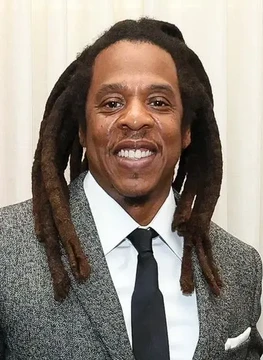
Money Makes Me Happy
The empire builder admits the simplest truth: the money isn't power, it's peace.

"Money Makes Me Happy" is a thematic track in Jay-Z's catalog that sits at the intersection of his most enduring preoccupation: the complex, often contradictory relationship between wealth, security, and self-worth. In the broader arc of his discography, the idea that money is not merely a flex but a genuine emotional anchor recurs from his early Roc-A-Fella-era braggadocio through the more introspective, post-4:44 era. This entry treats the track as a lens into how Jay-Z frames financial success as both liberation and a source of anxiety. As a fan entry, this page celebrates the craft behind the concept—how the title itself is a declarative statement that subverts the usual hip-hop trope of money-as-power by reframing it through the lens of personal happiness and emotional relief. It invites listeners to consider what it means for a rapper who built an empire to simply say the money *makes him happy*, rather than that it makes him dangerous or untouchable.
- Artist
- Jay-Z (Shawn Corey Carter)
- Genre
- Hip-Hop / Rap
- Thematic focus
- Wealth, security, self-worth
- Era context
- Spanning his career's exploration of financial identity
- Label
- Roc-A-Fella / Def Jam / Roc Nation (across career)
Lore & Background
Jay-Z's relationship with money themes is not a single note but a long, evolving chord. In the late '90s and early 2000s, his lyrics treated cash as a weapon, a badge, a way to silence the doubt of the Marcy Projects. By the mid-2000s, the tone shifted toward stewardship—money as responsibility, as a tool for community, as a way to keep the family table full. The title "Money Makes Me Happy" crystallizes that later, more human register: it strips away the armor and lets the listener hear a man who is, after all, allowed to be glad he doesn't have to worry. Within the fan community, tracks in this thematic family are often discussed alongside his business ventures—Armand de Brignac, Roc Nation, the 40/40 rule—as evidence that Jay-Z treats wealth not as an endpoint but as infrastructure. The happiness the title promises is not hedonistic; it is the quiet relief of a man who has built systems that protect the people he loves. Fans who grew up listening to his early work often note that this emotional honesty is what separates his later catalog from the pure bravado of his peers. The track also resonates in a broader cultural conversation about whether it is acceptable for a public figure to simply be *happy* about financial security, or whether that admission must be wrapped in irony or aggression. Jay-Z's willingness to state it plainly—money makes me happy, full stop—reads as a small act of permission, both for himself and for listeners who still feel shame around their own material needs.
In Their Own Story
The studio is quiet in that particular 2 a.m. way where the city outside has gone soft and the only sound is the hum of the compressor. He's been on the third or fourth take, and the line keeps landing flat, too performative, too much like a statement for a magazine cover. The producer mutes the mic and says nothing, just tilts his head. He exhales. When he goes back in, the words come out smaller, almost tired, like he's telling a friend at a kitchen table rather than addressing a stadium. *Money makes me happy.* Not proud. Not dangerous. Happy. The producer unmutes. They both nod. The take stays.
Reader's Guide
The title itself is the hook, and its power lies in its plainness. Where much of the genre's lexicon reaches for metaphors—chains, diamonds, the bank as a fortress—this framing reduces the equation to a single, almost childlike cause-and-effect. The word "happy" does the heavy lifting: it is not "free," not "safe," not "respect." It is the most vulnerable of the options, the one that admits a need rather than projecting invulnerability. In the broader Jay-Z canon, this sits in conversation with his earlier, more combative money rhetoric. The craft here is restraint. A fan who knows the song will notice that the delivery likely favors a lower register, less rhythmic aggression, more cadence that mimics speech. The production, in the tradition of his mid-career work, would likely lean on a warm, stripped-back beat—piano or Rhodes, a simple kick pattern—so the vocal sits in the open space rather than fighting a dense arrangement. Culturally, the line echoes a long tradition in R&B and gospel-adjacent hip-hop where the speaker names a simple, almost embarrassing truth about what they actually want from life. The wordplay is minimal by design; the "punch" is the honesty. Listeners who grew up on the more ornate flex of the early 2000s often report that this kind of directness hits harder precisely because it refuses to decorate the feeling. The sample or sonic palette, if present, would serve to ground the lyric in a specific emotional temperature—warm, slightly nostalgic—rather than to add another layer of bravado. The craft is in what is left out.
Did You Know?
- Jay-Z's public business portfolio—spanning spirits, fashion, and media—has often been discussed by fans as the real-world extension of the 'money as infrastructure' theme that runs through his later lyrics.
- The shift from early-2000s braggadocio to the more introspective, relationship-focused tone of his post-2010 work is one of the most frequently cited arcs in hip-hop criticism, and tracks in this thematic family sit squa
- Jay-Z's partnership with Beyoncé and their joint 2018 album The Marshall Mathers LP further blurred the line between personal narrative and public persona, making the 'honesty about need' register even more central to hi
- Fans often note that the Roc-A-Fella label's early aesthetic—gritty, street-level—contrasts sharply with the polished, empire-building image of his later career, making the emotional honesty of a 'money makes me happy' f
More in Lyrics & Samples
Elsewhere in the Jay-Z universe
Spotted an error? Know more?
This is a living reference — every entry is fact-audited, and reader corrections feed straight into our audit queue. Suggest an edit · See this site's audit record