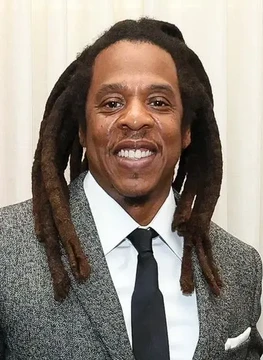
The Dynasty
A throne built from concrete, a crown forged in the block, a name that outlives the verse.

The Dynasty is a recurring thematic pillar in Jay-Z's body of work, representing his self-conceptualization as the architect of a hip-hop legacy that extends beyond any single album. Rather than a single standalone track, the dynasty motif threads through his discography as a declaration of institutional power, generational continuity, and the building of an empire rooted in the streets of Brooklyn. It captures the moment when a rapper's ambition outgrows the individual and becomes an institution. For fans, the dynasty theme is the emotional spine of the Roc-A-Fella era and its aftermath: the idea that hip-hop is not just a genre to perform but a lineage to steward, a throne to pass forward. It reframes flexing as world-building, and every verse about money, family, or territory becomes a brick in a larger structure.
- Artist
- Jay-Z (Shawn Corey Carter)
- Genre
- Hip-hop / Conscious Rap
- Core Theme
- Legacy, institutional power, generational continuity
- Associated Label
- Roc-A-Fella Records
- Home Base
- Brooklyn, New York
- Status
- Ongoing thematic throughline across career
Lore & Background
The dynasty concept in Jay-Z's music is inseparable from the geography of Brooklyn. The South Bronx and Brooklyn projects are not just backdrops; they are the founding charter of the institution he describes. Every reference to the block, the corner, the specific street, functions as a deed of ownership written in baritones and boom-bap. The dynasty is not inherited—it is claimed, verse by verse, from the ground up, and that labor is central to the mythology. The Roc-A-Fella era crystallized this theme into corporate reality. Signing artists, producing for peers, controlling distribution—these were not business decisions but narrative beats in the dynasty story. The label became a character in the lyrics, a family tree where Jay-Z sits at the root. Even after the label's dissolution, the dynasty language persists, evolving from a specific roster to a broader cultural claim: that the sound, the cadence, the Brooklyn-ness of the music belongs to a lineage he helped define. What makes the dynasty motif resonate with listeners is its duality. It is simultaneously personal (a father building for children, a man protecting his family's name) and political (a Black man claiming institutional power in an industry that historically extracted from him). The flex is real, but the architecture underneath is a story about who gets to be the founder, the patriarch, the one whose name is the address.
In Their Own Story
The studio is dark except for the red tally light. The beat is a slow, heavy thump—something that sounds like a heartbeat slowed to the pace of a man who has already won and is simply waiting for the world to catch up. He leans back, arms crossed, watching the engineer nod. Outside the glass, the city hums its indifferent hymn. He doesn't need to shout. The dynasty doesn't announce itself. It simply occupies the space, the way a name on a building occupies a skyline. Someone in the booth asks if they should run it again. He shakes his head. One take. The institution doesn't rehearse. It simply is, and the room rearranges itself around that fact.
Reader's Guide
The dynasty motif operates on a specific rhetorical structure: the shift from first-person singular to first-person plural. Early verses position the speaker as an individual claiming space—"I" on a corner, "my" name on a track. As the narrative arc progresses, the pronoun expands. The block becomes the family. The family becomes the label. The label becomes the culture. This grammatical widening is the engine of the dynasty conceit. The wordplay typically layers three registers simultaneously: the street (concrete, block, corner), the corporate (equity, roster, distribution), and the mythic (throne, crown, lineage). A single line might reference a specific Brooklyn intersection while using the cadence of a coronation and the vocabulary of a balance sheet. The listener is meant to feel all three at once. The sonic construction reinforces this. Boom-bap drums provide the street foundation. String samples or orchestral swells add the mythic register. The production's confidence—the way the beat sits back and lets the vocal dominate—mirrors the corporate register of a man who owns the room. No track in the dynasty mode is rushed. The tempo is deliberate. The pauses are strategic. The silence between bars is as much a statement of ownership as the words themselves.
Did You Know?
- Roc-A-Fella Records, founded in 1995, was co-founded by Jay-Z and became one of the most influential hip-hop labels of the 1990s and 2000s, serving as the institutional backbone of the dynasty narrative.
- Jay-Z's use of the 'Hova' and 'Hustler and Flow' personas across albums functions as a mythological framework, layering different 'generations' of the dynasty identity onto a single artist.
- The Brooklyn-specific geography in his lyrics—references to specific projects and streets—serves as a form of cultural cartography, mapping the dynasty's territory in a way that resists generic urban rap tropes.
- The transition from independent label head to major-label executive and then to a multi-industry entrepreneur (arbour, Tidal, D'Uss cognac) mirrors the dynasty's expansion from a single room to a sprawling estate.
More in Lyrics & Samples
Elsewhere in the Jay-Z universe
Spotted an error? Know more?
This is a living reference — every entry is fact-audited, and reader corrections feed straight into our audit queue. Suggest an edit · See this site's audit record