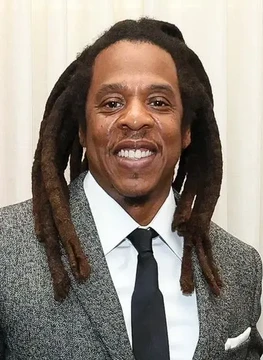
Billboard 200 No. 1 Debut – The Blueprint (2001)
The album that told the world Jay-Z was back, and he didn't need to explain why.

The Blueprint (2001) is the fourth studio album by Jay-Z, released through Roc-A-Fella Records. It marked a deliberate return to hip-hop's core after the R&B-tinged crossover of Vol. 2… Hard Knock Life, reasserting his identity as a lyricist and a figurehead of New York rap. The album debuted at No. 1 on the Billboard 200, cementing his status as one of the most commercially dominant artists of the early 2000s. In the broader narrative of Jay-Z's career, The Blueprint is often cited by fans and critics alike as the album that redefined his artistic direction. It showcased a leaner, more confident voice, a rotation of elite producers, and a set of tracks that became permanent fixtures in hip-hop canon. Its No. 1 debut was less a surprise than a confirmation of where he already stood in the industry.
- Artist
- Jay-Z (Shawn Corey Carter)
- Album
- The Blueprint
- Release year
- 2001
- Label
- Roc-A-Fella Records
- Studio album number
- 4th
- Chart achievement
- Debuted at No. 1 on the Billboard 200
- Notable single
- "Izzo (H.O.V.A.)"
Lore & Background
By 2001, the hip-hop landscape had shifted. The mid-to-late nineties had produced a wave of crossover R&B-hip-hop hybrids, and the industry was hungry for the next wave. Jay-Z, already a cultural icon from Vol. 2… Hard Knock Life, chose a different path. Rather than chase the pop formula that had made him a household name, The Blueprint stripped things back to what he did best: dense, self-assured lyricism over hard-hitting beats, delivered with the unapologetic swagger of a man who had already won and was simply showing his work. The production roster was a who's-who of the era's most respected beatmakers. DJ Premier brought his signature gritty, sample-heavy craft; Just Blaze contributed sleek, minimal grooves; Timbaland added his signature rhythmic texture. This rotation gave the album a cohesive yet varied sonic identity, avoiding the homogeneity that plagued many releases of the period. The result was an album that sounded simultaneously timeless and of-the-moment, a quality fans still point to when discussing its longevity. Culturally, The Blueprint arrived at a moment when hip-hop was reasserting its dominance in mainstream music. Its No. 1 debut was a statement that pure, lyric-driven rap could still command the top of the charts without compromise. For the fan community, it became the album they recommended to newcomers, the one they played on repeat during the long summer of 2001, and the one they still cite years later as the high-water mark of Jay-Z's solo catalog.
In Their Own Story
The studio was cold that night, the kind of cold that creeps through the walls of a Manhattan loft and makes your breath visible. Jay-Z sat at the mic with a half-empty glass of water, the beat looping under him like a slow heartbeat. He'd just finished the verse he'd been circling for three days—the one where he didn't explain himself, didn't apologize, didn't perform. He just stated. The engineer nodded, hit record, and the room went quiet in that particular way it does when you know the take is the one. Outside, the city hummed its indifferent hum. Inside, a No. 1 album was being born, one unadorned bar at a time, and nobody in the room needed to say a word about it.
Reader's Guide
Chart Performance The Blueprint debuted at No. 1 on the Billboard 200 in 2001, making it Jay-Z's fourth studio album to top the chart. In the context of the early 2000s, where hip-hop was navigating a post-hip-hop-hop cultural moment, a No. 1 debut from a pure rap album was a significant commercial statement. Critical Reception The album was widely praised by critics for its lyrical density, production quality, and cohesive artistic vision. It is frequently referenced in retrospective lists of the best albums of the 2000s and in discussions of Jay-Z's peak creative output. Cultural Impact The single "Izzo (H.O.V.A.)" became a defining track of the era, celebrated for its dense wordplay and confident delivery. The album as a whole is often cited as the record that reasserted New York's dominance in hip-hop after a period of West Coast and Southern ascendancy. Legacy In fan discourse, The Blueprint is often held up as the album that proved Jay-Z could be both a commercial force and an artist of substance, a duality that defined the rest of his career. Its No. 1 debut is less remembered as a shock and more as a confirmation of an already-established hierarchy.
Did You Know?
- The Blueprint was recorded with a rotating cast of some of the most sought-after producers of the era, giving it a sonic range that set it apart from the more uniform production styles common in early-2000s hip-hop.
- The album represented a conscious artistic pivot away from the R&B-inflected sound of its predecessor, Vol. 2… Hard Knock Life, and back to the hard-edged, lyric-forward hip-hop that defined Jay-Z's earlier work.
- "Izzo (H.O.V.A.)" became one of the most frequently sampled and referenced tracks in hip-hop culture, with its dense, self-referential lyricism becoming a touchstone for a generation of aspiring MCs.
- The album's No. 1 debut came at a time when hip-hop was reasserting its mainstream dominance, and its success helped pave the way for the wave of critically acclaimed rap albums that followed in the early-to-mid 2000s.
More in Awards & Records
Elsewhere in the Jay-Z universe
Spotted an error? Know more?
This is a living reference — every entry is fact-audited, and reader corrections feed straight into our audit queue. Suggest an edit · See this site's audit record