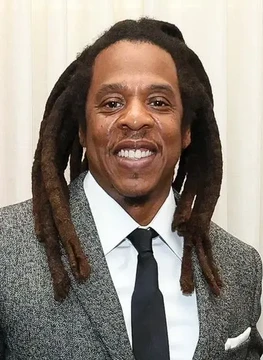
Roc Nation
The label became the empire, and the empire became the legacy.

Roc Nation is the business empire and creative label that Jay-Z (Shawn Carter) built to carry the torch of the Roc-A-Fella legacy into a new decade. Founded in 2008, it operates as a record label, talent-management firm, concert-promotion company, and sports-management division all under one New York–based roof. In the Jay-Z story, Roc Nation marks the shift from 'rapper who runs a label' to 'executive who built an institution.'
For fans, this era is where the mic steps back and the boardroom steps forward. It is the chapter where Jay-Z becomes less a performer on a stage and more the architect of the stages, the tours, the rosters, and the deals that shape the music industry for a generation of artists who came after him.
- Founded
- 2008
- Founder / CEO
- Shawn 'Jay-Z' Carter
- Headquarters
- New York City, New York
- Predecessor label
- Roc-A-Fella Records (est. 1995)
- Key divisions
- Record label, talent management, concert promotion, sports management
- Notable roster artists
- Kanye West, Alicia Keys, John Legend (among others)
- Jay-Z's role shift
- Stepped back from active recording to focus on the business side (circa 2013)
Lore & Background
Roc-A-Fella Records, launched in the mid-1990s with Diddy and Damon 'Dam' Taylor, gave a generation of East Coast rappers a home and a sound. By the time that original label's momentum faded, Jay-Z had already been thinking bigger than a roster of MCs. Roc Nation, born in 2008, was his answer to a question the industry kept asking: what happens when the artist stops being just an artist? The answer was a conglomerate. Roc Nation signed and managed musicians, promoted large-scale concert tours, and extended its reach into athlete representation. The creative team around Jay-Z during this period included long-time collaborators in production, A&R, and business operations, but the public face was unmistakably one man's vision: a New York institution that treated hip-hop not as a genre to be exploited but as a business to be built. Artists like Kanye West and Alicia Keys rode the label's wave into some of their most commercially dominant periods, while the concert-promotion arm turned arenas into revenue engines. What makes Roc Nation resonate with fans is the duality. It is the era where Jay-Z's voice is still on the record—album after album, verse after verse—but his fingerprints are also on the contract, the tour schedule, the handshake across the table. The music and the money stopped being separate stories and became one.
In Their Own Story
The glass walls of the 21st-floor office catch the last amber light of a Manhattan winter evening. On the desk, a half-empty bottle of water sits beside a stack of tour contracts, each one stamped with the same clean logo. Jay-Z stands at the window, phone pressed to his ear, negotiating a residency deal that will keep three arenas lit for six weeks. Behind him, a young A&R rep is trying to describe a new artist's demo in words that won't make the executive sound like he's selling a car. The city hums below, indifferent. He hangs up, pulls on a black coat, and walks out into the cold. The label's lights stay on all night. They always do.
Reader's Guide
Think of Roc Nation as the 'empire arc' of the Jay-Z story. Roc-A-Fella was the garage band with a corner office; Roc Nation is the skyscraper. The defining sound of this era is less a single production style than a philosophy: the roster is wide, the business is tight, and the creative freedom given to artists like Kanye West and Alicia Keys is matched by a ruthless commercial engine. You still hear the New York grit, but it's wrapped in a corporate sheen that never quite disappears. Business posture: multi-divisional. Record label, talent management, concert promotion, sports management—Jay-Z built a pipeline where an artist's song, their tour, their brand deal, and their athlete endorsement all flow through one building. The public persona shifts from 'the best rapper alive' to 'the most connected man in the room.'
Landmark moments to anchor the era: the 2008 launch of Roc Nation as the successor to Roc-A-Fella; the mid-2010s stretch where Jay-Z's own albums (like the 2013 and 2014 records) doubled as statements that the artist and the executive were the same person; and the continued dominance of the concert-promotion arm, which turned Jay-Z's touring into an industry benchmark. What changed from the Roc-A-Fella era? The roster got more genre-fluid, the business got more vertical, and Jay-Z's public identity tilted from performer to proprietor. What didn't change: the New York address, the black-on-black aesthetic, and the insistence that hip-hop runs the room, not the other way around.
Did You Know?
- Roc Nation was not simply a rebrand of Roc-A-Fella; it was structured as a broader entertainment and management company, meaning its roster and services extended well beyond hip-hop recording.
- The concert-promotion division of Roc Nation became a major force in live music, handling large-scale tours and residencies that rivaled the industry's biggest promotion firms.
- Jay-Z's decision to step back from active recording in the early 2010s was widely discussed as a deliberate pivot to let the business side of Roc Nation take center stage while he remained its public face.
- The 'Roc' name itself is a deliberate play on 'Rock,' a naming convention carried over from the original Roc-A-Fella label, signaling continuity even as the company's scope expanded dramatically.
More in Eras & Timeline
Elsewhere in the Jay-Z universe
Spotted an error? Know more?
This is a living reference — every entry is fact-audited, and reader corrections feed straight into our audit queue. Suggest an edit · See this site's audit record