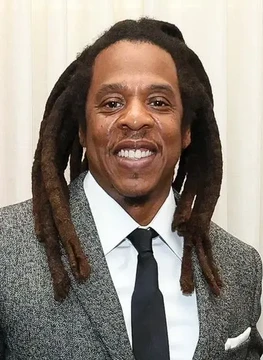
Drake
The Toronto kid who turned vulnerability into a global hip-hop dynasty.

Drake (Aubrey Drake Graham) is the Canadian rapper, singer, songwriter, and entrepreneur who became the defining voice of hip-hop's melodic turn in the 2010s and beyond. In the broader Jay-Z universe of hip-hop's commercial and cultural kings, Drake occupies the role of the generational successor—the artist who inherited the throne of global dominance after Jay-Z's era of album-cycle supremacy gave way to streaming-era playlist culture. Where Jay-Z built an empire on lyrical density, business acumen, and the weight of the 90s, Drake built his on emotional vulnerability, genre-blending hooks, and an almost omnipresent digital footprint. Their relationship is less one of direct collaboration and more one of cultural succession: two men from different cities, different decades, and different philosophies of what rap can be, yet both occupying the singular position of 'the most important rapper alive' during their respective peaks. Drake's rise is inseparable from the landscape Jay-Z helped define.
- Role
- Rapper, singer, songwriter, producer, actor, entrepreneur
- Affiliation
- OVO Sound / Universal Music Group
- Origin
- Toronto, Ontario, Canada
- Era
- 2009 – present
- Status
- Active
- Primary genres
- Hip-hop, R&B, pop, trap
Lore & Background
Drake's entry into music was almost accidental by the standards of the hip-hop establishment. A teenager playing a troubled student on the Canadian soap Degrassi: The Next Generation, he began releasing mixtapes under the name 'Drake' (a nod to a character name) while still in high school. By the time his 2009 debut So Far Gone landed, the hip-hop world was still processing the aftershocks of the Jay-Z and Kanye West era, and the melodic, emotionally open style Drake brought from Toronto felt like a genuine shift in the genre's center of gravity. His 2011 album Take Care, produced in large part by Noah '40' Shebib, crystallized a sound that wove auto-tuned singing over sparse, atmospheric beats, and it redefined what a 'rap album' could be. The record's themes—loneliness, ambition, the cost of fame—resonated with a generation that grew up in the post-9/11, pre-smartphone-anxiety world, and it positioned Drake as the emotional heir to a throne Jay-Z had held through pure commercial force and lyrical authority. Building OVO Sound into a multi-artist label and a cultural brand, Drake replicated, in his own image, the empire-building Jay-Z had done with Roc-A-Fella and later Roc Nation. The parallel is deliberate in the cultural imagination: two men who made themselves the gravitational center of their respective eras, each with a stable of artists, a visual identity, and a business machine that outlasted any single album cycle. Drake's Toronto base also gave hip-hop a second major North American city beyond New York, a fact that would have been unthinkable a generation earlier when Jay-Z's Brooklyn was the undisputed capital.
In Their Own Story
The studio in Toronto is dark except for the amber glow of the mixing console. Drake sits cross-legged on the leather couch, phone in one hand, a half-finished cigarette in the other. The beat is looping—something sparse, a piano chord repeating, a kick drum that hits like a slow heartbeat. He's been on the same bar for three hours. Outside, the city hums its indifferent hum. He thinks about Brooklyn, about the weight of a name that came before him, about how every king has to answer to the ghost of the last one. He exhales, leans back, and says the line one more time. This time it lands. The engineer nods. The tape rolls. Somewhere across the ocean, in a penthouse in Manhattan, a man who built an empire on a different kind of fire listens to the radio and hears, for the first time, that the throne has changed hands. Not taken. Just… passed. Like a relay baton in the dark.
Reader's Guide
The most defining 'collaboration' between Drake and Jay-Z is the one that never happened on a record: the cultural relay. Drake emerged in 2009 as Jay-Z's dominance was entering its final chapter, and the two men became bookends of a twenty-year arc in mainstream hip-hop. Their intersection is generational and philosophical. Jay-Z's Brooklyn rap was built on density, wordplay, and the swagger of a man who had to prove he belonged in a room that wasn't built for him. Drake's Toronto rap is built on feeling, repetition, and the confidence of a man who never needed to prove anything to that room. Where Jay-Z's peak albums—The Blueprint, Reasonable Doubt, The Black Album—were statements of identity, Drake's Take Care and Scorpion are diaries of identity in flux. The pairing matters because it maps the entire shift in hip-hop's commercial engine: from the album-as-event to the streaming-as-lifestyle, from the rapper-as-lyricist to the rapper-as-artist. Drake didn't dethrone Jay-Z in a feud or a feature; he simply outlasted the era that made Jay-Z necessary. And in the culture's memory, that quiet succession is its own kind of collaboration—one written in the silence between two men who never needed to share a mic to share a legacy.
Did You Know?
- Drake was a teenager on the Canadian TV series Degrassi: The Next Generation before his music career took off, and his stage name is a reference to a character on that show.
- He founded OVO Sound (October's Very Own) as his own label and creative house, building a multi-artist roster that functions as a cultural ecosystem in its own right.
- Drake's 2011 album Take Care was largely produced by Noah '40' Shebib in Toronto and is widely credited with shifting mainstream hip-hop toward a more melodic, emotionally open sound.
- His Toronto base helped establish the city as a second major hip-hop hub in North America, a development that would have been inconceivable during Jay-Z's 90s dominance of New York.
More in Artists & Collaborators
Elsewhere in the Jay-Z universe
Spotted an error? Know more?
This is a living reference — every entry is fact-audited, and reader corrections feed straight into our audit queue. Suggest an edit · See this site's audit record